
How bundling works and why bundlers are dangerous
How a creator buys a big share of a new coin in the same instant it launches, hides it across many wallets, and why that bag is aimed at you.
Words in this lesson
On this page
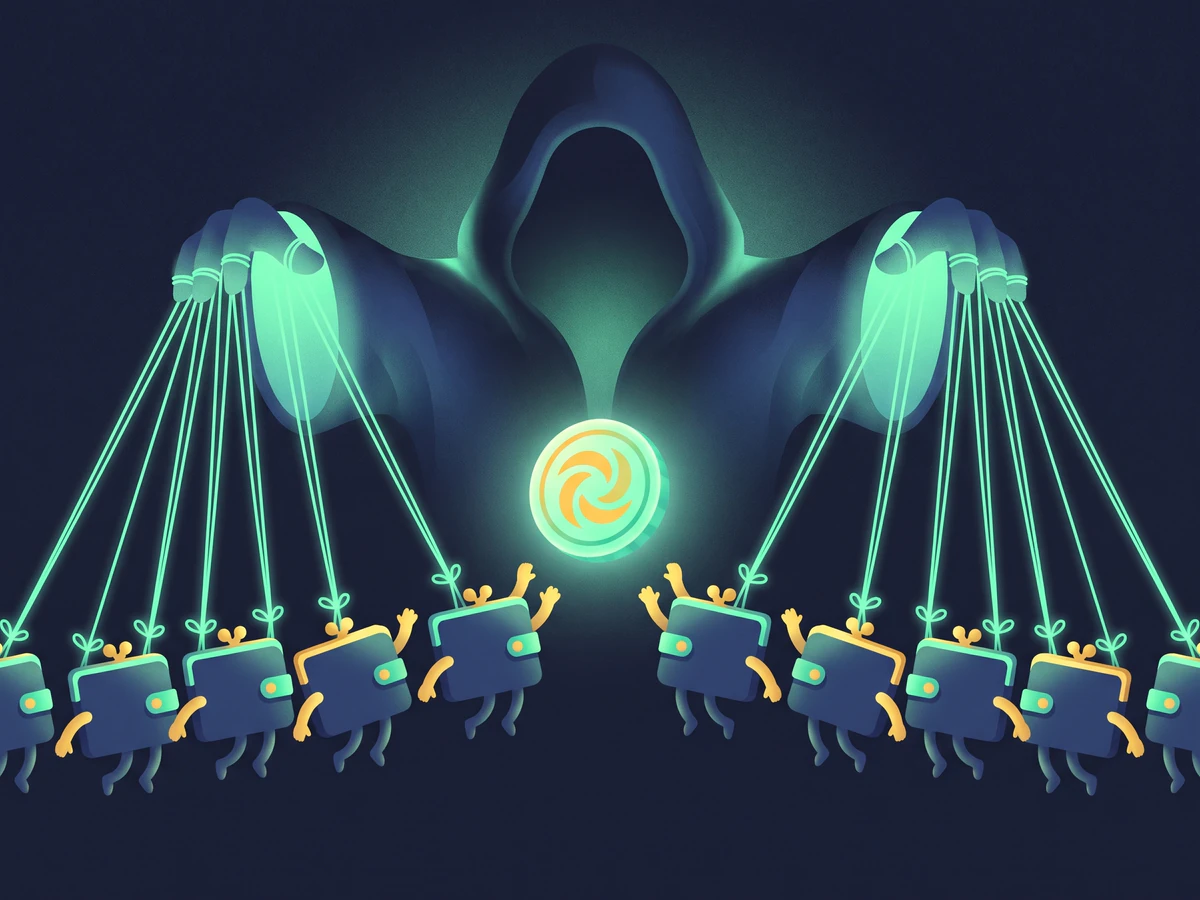
On Solana, a bundle is a small package of transactions that land together, in a set order, in the same block. A popular service called Jito lets anyone send one. Its own docs set the rules: up to five transactions, run one after another in the order listed, all in the same block, and if any one of them fails, none of them happen. The sender pays a small tip to be included.
Bundles have honest uses. A trader can use one to keep a trade from being picked apart by bots. But in memecoins, a bundle usually means one thing: a creator launching a coin and buying a big share of it in the same instant, from many wallets at once.
How a bundled launch works
- The creator makes a batch of fresh wallets and sends a little SOL to each. Careful ones route the SOL through extra hops so the wallets do not look linked.
- They build a bundle. The first transaction creates the coin. The next ones buy it from those wallets. A bundle holds only five transactions, but one transaction can carry buys from several wallets, so a single bundle can buy from 15 or 20 wallets at once.
- The bundle lands in one block. The coin exists and is already part-owned before any outside buyer or bot can act.
- The holder list now shows many separate wallets, each with a few percent. At a glance it looks like a crowd of early fans.
Why it is cheap to grab half a coin
A new coin on a bonding curve starts very cheap, and the price climbs with every buy. Whoever buys first gets the most tokens for each SOL. A bundle guarantees the creator is first.
A bundle in numbers (pump.fun-style curve, before fees)
The creator launches a coin and, in the same block, buys it from 15 fresh wallets, 2 SOL each, 30 SOL in total. At the very start the whole coin is valued at only about 28 SOL.
- Step 1: Those 30 SOL buy about 536 million tokens, 53.6% of the 1 billion supply.
- Step 2: The first wallet gets about 6.7% and the last about 1.9%, because the price rises after each buy. No single wallet looks big.
- Step 3: After the bundle the coin's market cap is about 112 SOL. Every real buyer starts from there.
- Step 4: If the coin later reaches a 1,000 SOL market cap, that hidden half of the supply is worth over 500 SOL on paper. It cost 30.
Why bundlers are dangerous
A bundled bag is supply that someone got for almost nothing and plans to sell to you. Every buyer after the launch is, in effect, paying the bundler. Three things make it worse:
- It is hidden. Split across many wallets, a 50% position looks like fifteen small holders. A top 10 list can look healthy while one person controls the coin.
- It can leave all at once. The wallets can send everything to one address and sell in a single transaction. The chart does not dip. It falls off a cliff.
- It caps the price. While that bag exists, every pump is a chance for the bundler to sell. Real buyers spend their money soaking it up.
A real one: SHAR, October 2024
A Solana coin called Sharpei (SHAR) was promoted by crypto influencers, at least one of them paid, and reached a $54 million market cap within an hour of launch. Bubblemaps found that about 60% of the supply had been bought at launch and spread across more than 100 addresses. On October 23, 2024, those addresses sent their tokens to one wallet, which sold them in a single transaction for about $3.4 million. The price fell 96% in around two seconds.
How to spot a bundle
- Many wallets bought in the very block the coin was created. Solscan shows the block of every transaction.
- Those wallets are fresh: made hours ago, no history, funded from the same source.
- The buy sizes are suspiciously alike, like fifteen buys of about 2 SOL.
- Terminals such as Axiom and GMGN tag bundled wallets, and Bubblemaps has a bundle checker that shows what share of the supply was bundled.
Check what you learned
0 of 5 answered
Finished reading? Tick it off and your progress is kept in this browser.
This guide is for learning. It is not financial advice. Most memecoins go to zero and most people who trade them lose money. Only ever trade what you can afford to lose.