
Fair launch: what it promises and what it does not
What a fair launch really guarantees, the ways a launch can be unfair while following every rule, and how to judge one yourself.
On this page
You will see "fair launch" everywhere. It sounds like a promise that everyone had the same chance. Sometimes that is close to true. Often it is not.
What fair launch means
A fair launch means no presale, no free coins for a team, and no early investors holding cheap tokens. Everyone buys from the same market, under the same rules, from the first second. pump.fun describes itself as "giving everyone equal access to buy and sell from the start."
On a launchpad like pump.fun, the code really does back some of this up:
- The creator gets no free coins. If they want some, they buy on the curve like anyone else.
- The supply is fixed when the coin is created: one billion for a normal coin, two billion in Mayhem mode. The creator has no button to print more.
- Nobody can pull the curve's SOL, and the pool's money is locked when the coin graduates.
That is a real improvement on the old way, where a team kept a big slice for itself and could drain the pool whenever it liked.
What fair launch does not stop
- The creator's first buy. The creator can buy in the same transaction that creates the coin, so they are always first in line at the lowest price.
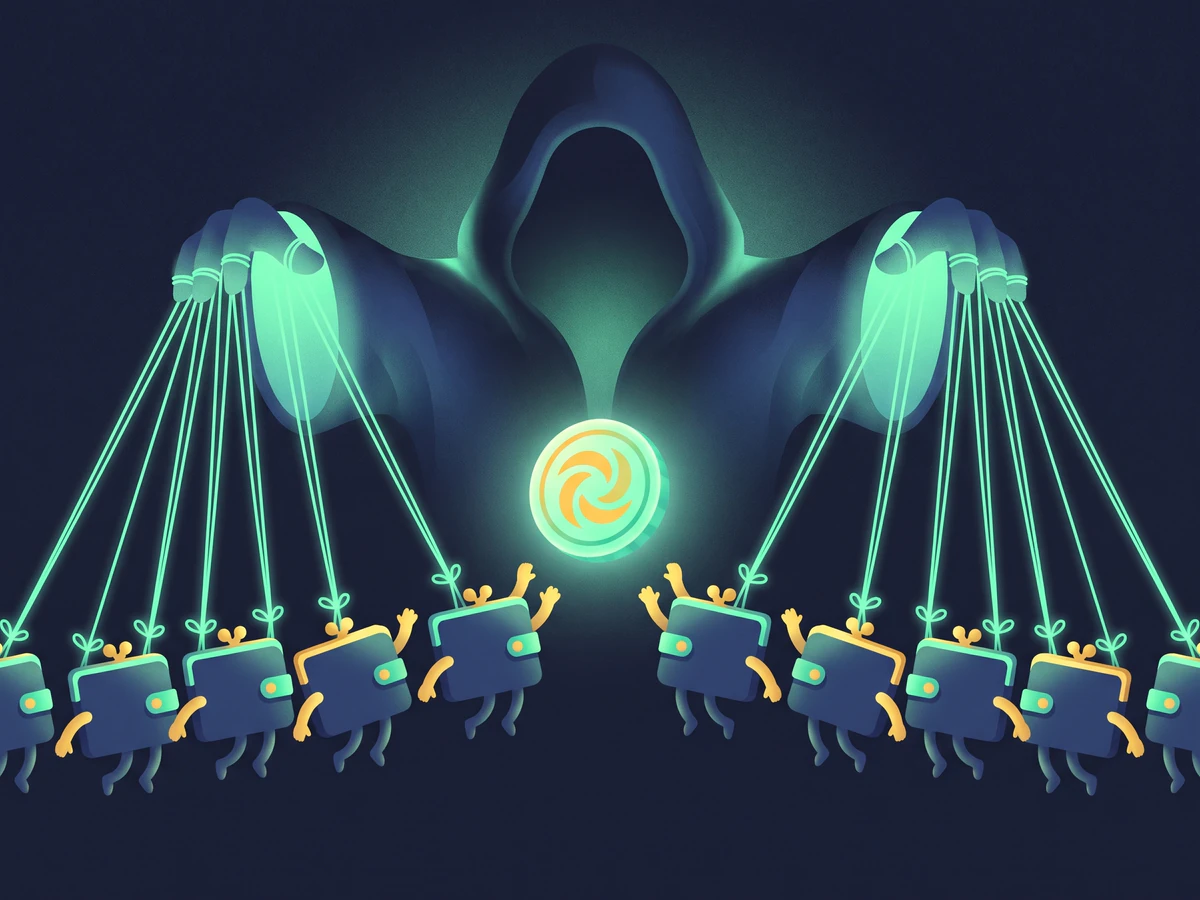
- Bundles. The creator, or a group, buys from many wallets in the same instant, so one person's big share looks like lots of small holders.
- Snipers. Bots watch for new coins and buy within the first second, before a human can click.
- Insiders. Friends of the creator or paid promoters hear about the coin before it is public.
- Selling. Nothing stops any of these people from selling everything to you once the price is up.
- Mayhem mode. If the creator switches it on, pump.fun's own trading agent gets an extra billion coins for free and can buy and sell during the first 24 hours. Whatever it still holds after that is burned, so the coin ends up with between one and two billion.
The fair launch that was not
A creator launches a coin on a pump.fun-style curve and posts "fair launch, no team tokens". Here is what happened on-chain, in round numbers before fees. Every rule of the launchpad was followed. It was still not fair.
- Step 1: In the very first moment, the creator buys 2 SOL worth and six wallets they funded buy 2 SOL each. That is 14 SOL in total.
- Step 2: Those seven wallets now hold about 341 million coins, about 34% of the whole supply. On a holder list they look like seven different people.
- Step 3: Over the next hour, other buyers put in 36 more SOL. The curve now holds 50 SOL of real money and the market cap is about 199 SOL.
- Step 4: The seven wallets sell everything. They take out about 36.7 SOL, more than double their 14 SOL.
- Step 5: The price falls about 71%. The 36 SOL the other buyers paid in is now backed by only about 13 SOL left in the curve.
Launches that skip the curve
Some creators skip the curve and open a trading pool straight away, with their own money in it. They keep the receipt for that pool, so they can take the money out whenever they like.
Bitquery counted about 451,000 pools like this opened directly on PumpSwap up to July 2026. 99% of them were later emptied, and for half of them money started leaving within about 12 minutes.
How to judge a launch yourself
- Look at the first buys. How much did the creator buy, and how many wallets bought in the same instant?
- Look at the top holders. Do a handful of brand new wallets hold a big share?
- Check whether the coin came from a curve or went straight to a pool, and who controls the pool's money.
- Read the creator's history. Have they launched many coins that died fast?
Check what you learned
0 of 4 answered
Finished reading? Tick it off and your progress is kept in this browser.
This guide is for learning. It is not financial advice. Most memecoins go to zero and most people who trade them lose money. Only ever trade what you can afford to lose.